

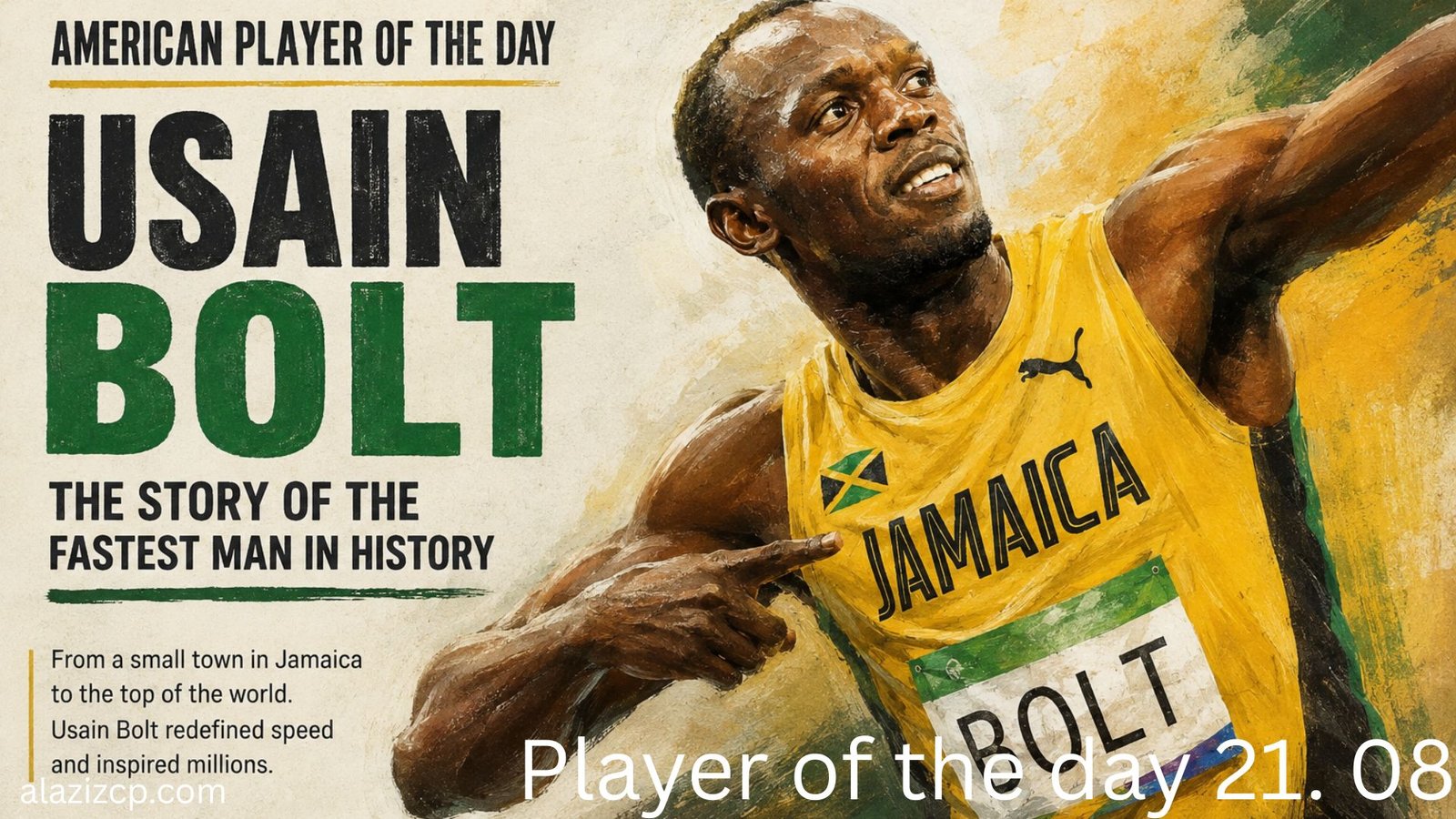
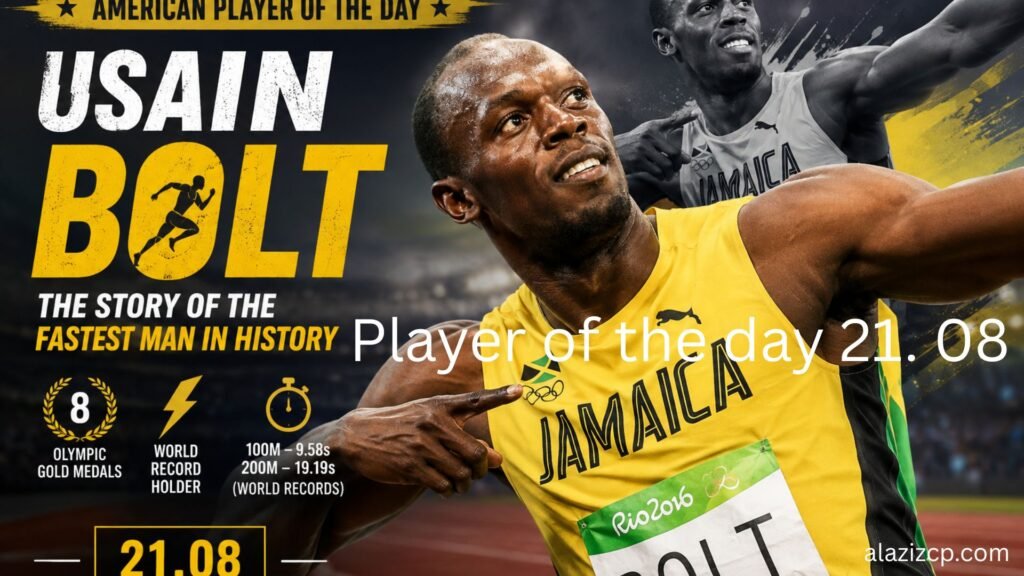
American player of the day 21.08. Usain Bolt. The Story of the Fastest Man in History
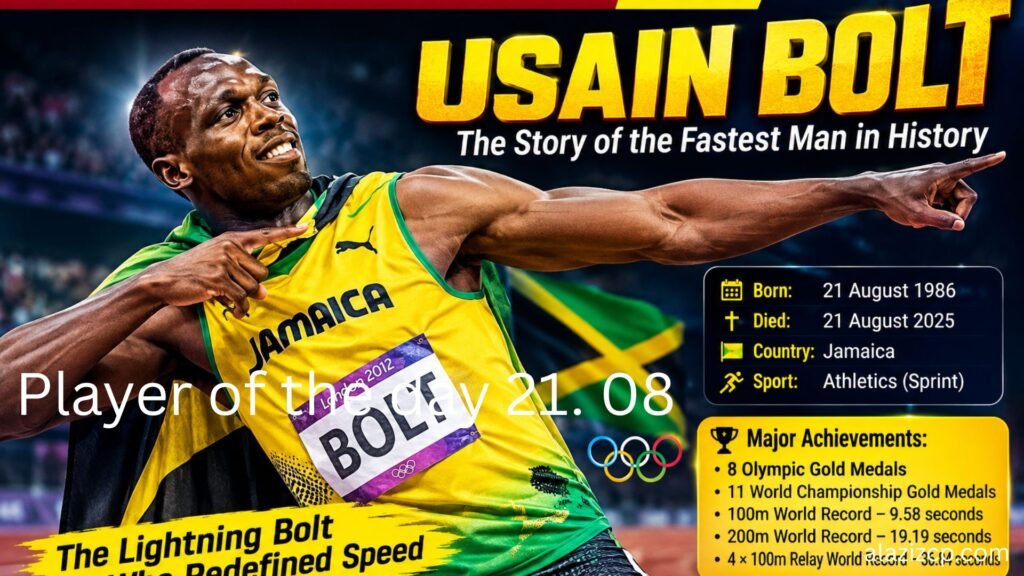
There are athletes who dominate their sport, and then there is one of them Usain Bolt, a runner so far ahead of his competition that his name became a synonym for speed itself. Born on August 21, 1986, in the small Jamaican town of Sherwood Content, Bolt transformed himself from a cricket loving schoolboy into the greatest sprinter the world has ever seen, leaving behind a legacy of world records that still stand untouched today.
Early Life in Jamaica
Usain St. Leo Bolt grew up in Trelawny, Jamaica, in a household that valued sport as much as everyday life. As a child, he was drawn to football and cricket rather than track and field, and he even dreamed at one point of becoming a fast bowler. It was actually his cricket coach who first noticed his extraordinary speed on the field and encouraged him to try athletics more seriously, a suggestion that would go on to change the course of sporting history.
A Rapid Rise Through the Junior Ranks
Once Bolt committed himself to sprinting, his progress was almost immediate. By the age of fifteen, he had already claimed gold in the 200 meters at the 2002 World Junior Championships, held on home soil in Kingston, making him the youngest ever world junior champion in that event. He became the first junior sprinter in history to break the 22 barrier in the 200 meters, a result that put the athletics world on notice that a rare talent had arrived.
Turning Professional Amid Early Setbacks
Bolt turned professional in 2004 under coach Fitz Coleman, but his early years as a professional athlete were far from smooth. Persistent hamstring injuries hampered his progress, leading to an early exit at the 2004 Athens Olympics and a disappointing final at the 2005 World Championships. In 2005, he began working with coach Glen Mills, who pushed him to adopt a far more disciplined, professional approach to training rather than relying purely on natural ability. That partnership would prove to be one of the most important relationships of his career.
Breaking Through as the World’s Fastest Man
By 2007, Bolt had established himself among the world’s elite sprinters, earning silver medals in both the 200 meters and the 4×100 meter relay at the World Championships in Osaka. The real breakthrough arrived in 2008, when he set his first 100-meter world record with a time of 9.72 seconds at a meet in New York City. Later that year, at the Beijing Olympics, Bolt announced himself to a global audience by winning gold in the 100 meters, 200 meters, and 4×100 meter relay, breaking the world record in all three events during a single Olympic Games.
Setting Records That Still Stand Today
At the 2009 World Championships in Berlin, Bolt lowered his own 100-meter world record to an astonishing 9.58 seconds, a mark that remains unbroken to this day. He also set the 200-meter world record at the same championships with a time of 19.19 seconds, another record that has yet to be matched. These two performances are widely regarded among the greatest displays of raw athletic speed ever recorded, and they cemented his reputation as an athlete operating on an entirely different level from his rivals.
A Historic Triple
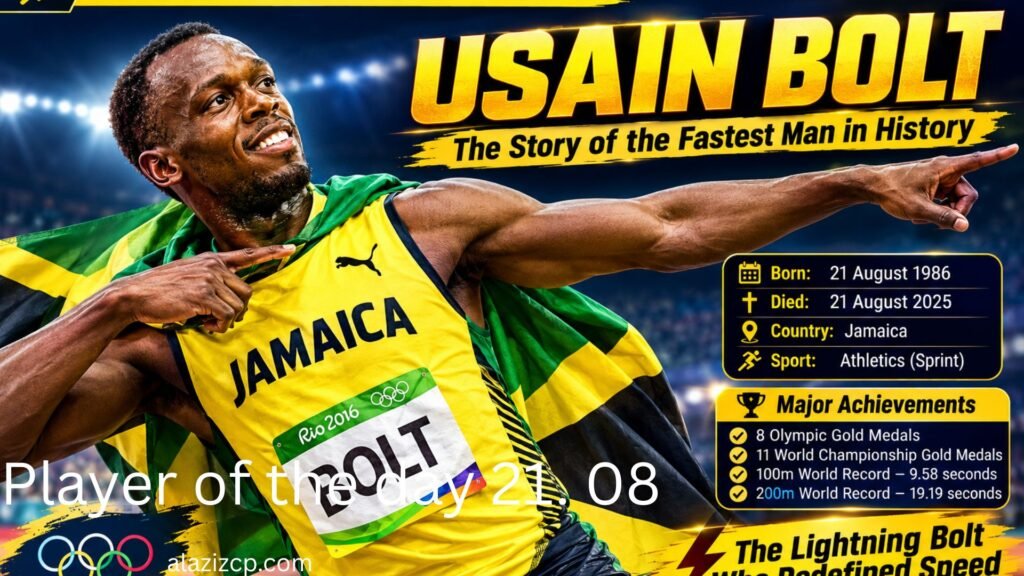
Bolt’s dominance at the Olympics became the defining feature of his career. At the 2012 London Games, he successfully defended his 100 and 200 meter titles, becoming the first man in history to win both sprint events at consecutive Olympics, and added a third gold in the relay. He repeated this same feat again at the 2016 Rio Olympics, completing what became known as the triple triple, nine gold medals across three consecutive Olympic Games in the same three events. Although he was later required to return one relay medal from Beijing after a teammate was retroactively banned for doping, his individual legacy remained untouched by controversy throughout his career.
A Personality That Transcended the Sport
Part of what made Bolt such a beloved figure went beyond his performances on the track. His confident, easygoing personality and his now famous lightning bolt victory pose turned him into a global entertainer as much as a competitor. He brought a level of charisma and showmanship to athletics that helped raise the profile of the sport worldwide, drawing in fans who might otherwise have had little interest in track and field.
Retirement and Life After Athletics
Bolt brought his competitive career to a close at the 2017 World Championships in London, where he took bronze in the 100 meters and finished eighth in the relay after suffering a hamstring injury in his final individual race. Since retiring, he has remained connected to the sport as a mentor and public figure, while also exploring business ventures and using his global platform to support education and youth development initiatives in Jamaica through the Usain Bolt Foundation.
Usain Bolt’s Lasting Legacy
Usain Bolt’s impact on athletics goes far beyond his medal count or his world records, remarkable as they are. He redefined what was thought possible in human speed, turned the 100-meter final into one of the most anticipated events at every Olympic Games he competed in, and inspired a new generation of sprinters to chase times that once seemed unreachable. Nearly a decade after his final race, his records in the 100 and 200 meters remain standing, a lasting testament to just how far ahead of his era he truly was.
Thanks for joining alazizcp.com

Senior Content Editor at AlAzizCP specializing in deep-dive biographies, career financial profiles, and daily updates on American celebrities, politicians, and sports legends. With years of experience researching public records, contract earnings, and media archives, the AlAzizCP editorial team delivers accurate and engaging insights into today’s most influential public figures.