

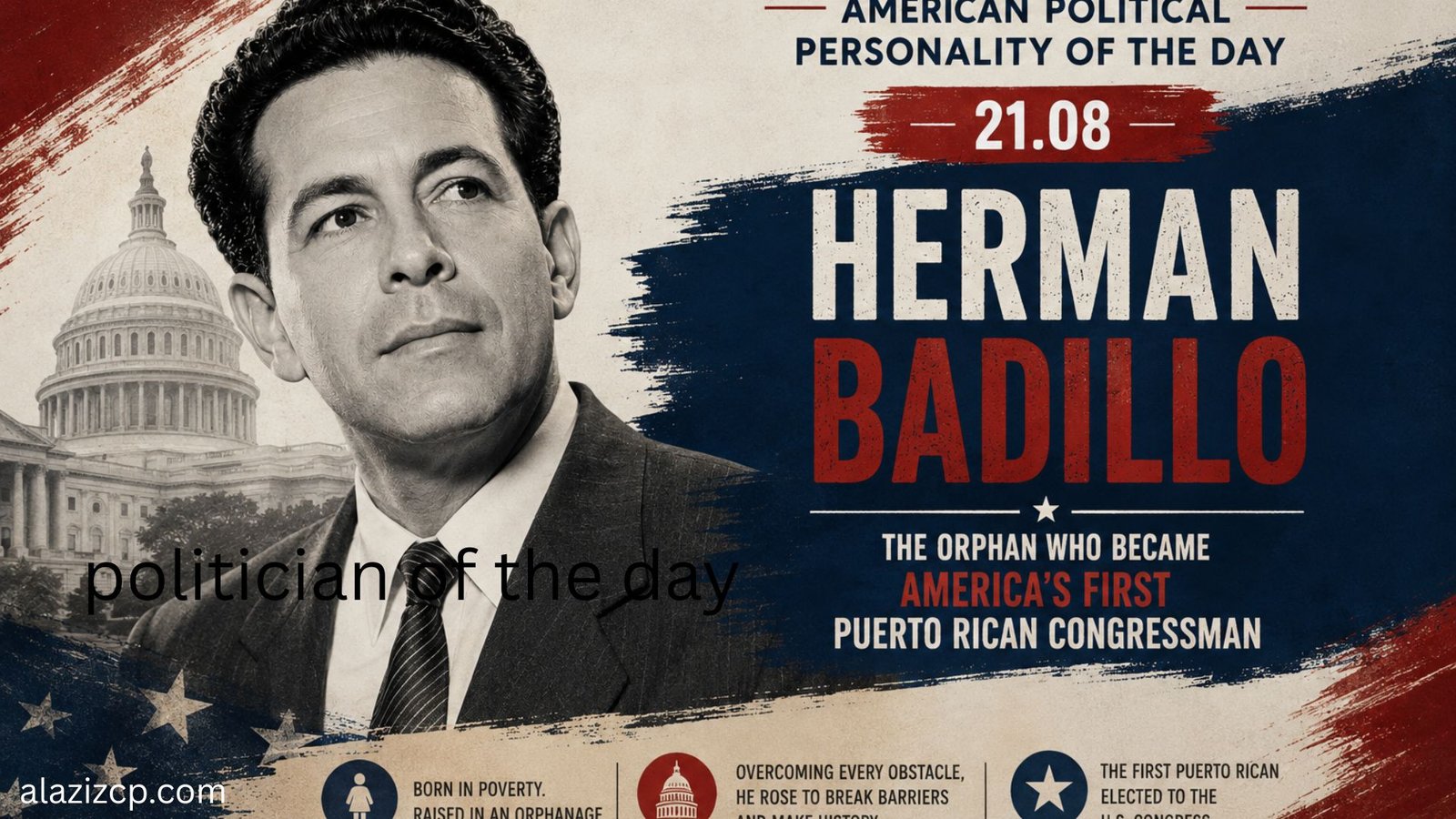
Who Was Herman Badillo? Biography, Career, and Political Legacy
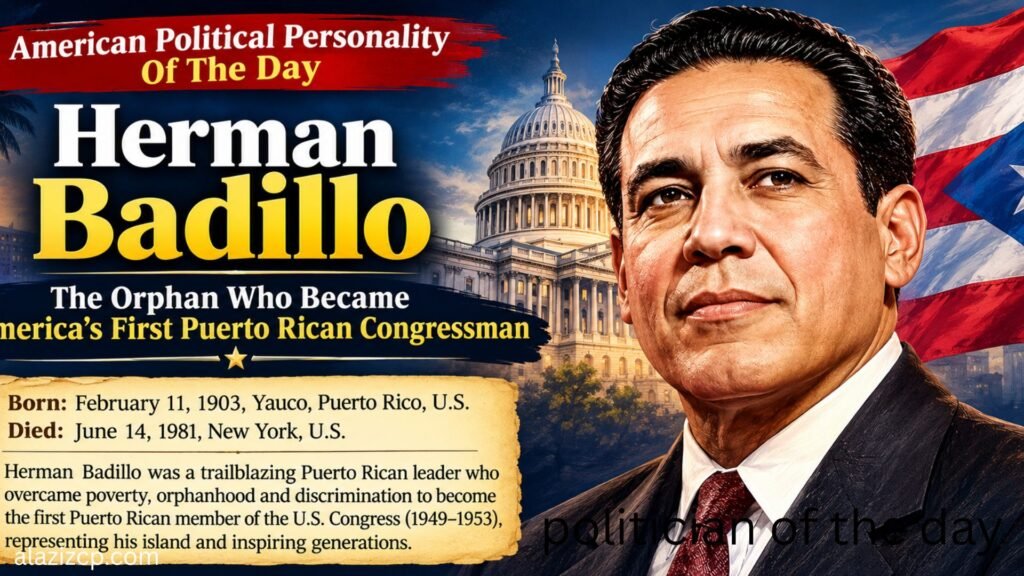
Do You Know American Political Personality Of The Day 21.08 Herman Badillo. The Orphan Who Became America’s First Puerto Rican Congressman
Some political careers start with privilege and connections, while others begin with nothing at all. Herman Badillo’s story belongs firmly in the second category. Born on August 21, 1929, in Caguas, Puerto Rico, he lost both of his parents to a tuberculosis epidemic before he turned five, yet he went on to break barriers that no Puerto Rican politician had broken before him, eventually becoming the first person born in Puerto Rico to serve as a voting member of the United States Congress.
A Childhood Marked by Loss
Badillo’s early life was shaped by hardship long before politics entered the picture. After losing his parents as a young child, he was raised by various relatives across Puerto Rico before an aunt brought him to New York City in 1941. He arrived in East Harlem as an orphan with little more than his own determination, attending New York City public schools at a time when few Puerto Rican children had access to the kind of education that could open doors later in life. He often described himself as the original immigrant in his own family, since it was his own journey, not that of a previous generation, that carried him from poverty into the heart of American public life.
Building a Foundation Through Education and Law
Rather than being defined by his difficult beginnings, Badillo used education as his path forward. He attended the City College of New York before going on to earn his law degree from Brooklyn Law School. This legal training gave him the tools to begin advocating for the rights of the growing Puerto Rican community in New York City, a role he would carry through nearly every stage of his career, whether in government, law, or public advocacy.
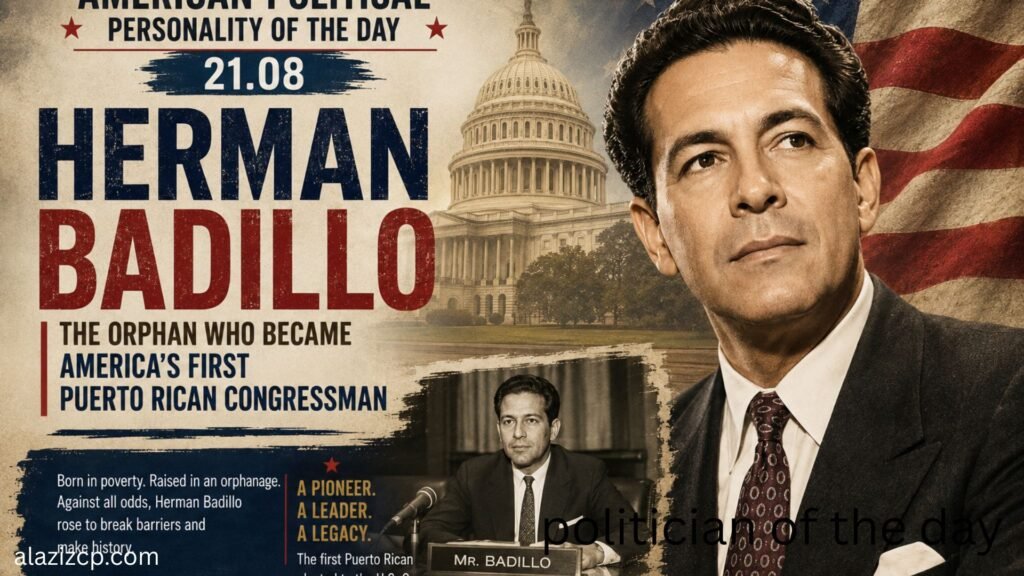
Early Steps Into New York City Politics
Badillo’s political involvement began in 1958 when he joined the Caribe Democratic Club, marking the start of a long relationship with New York City’s Democratic political scene. By 1960, he had taken on the role of chairing John F Kennedy’s campaign committee for East Harlem, and his support for Mayor Robert Wagner Jr’s 1961 re-election campaign led to a series of appointed positions within city government. In 1962, he took over as a city commissioner, further building the reputation and relationships that would eventually carry him toward elected office.
Becoming the First Puerto Rican Elected to Congress
In 1970, Badillo achieved a milestone that had never before been reached by anyone of Puerto Rican descent. He was elected to the United States House of Representatives from New York’s 21st congressional district in the South Bronx, becoming the first Puerto Rican ever elected to Congress. His district reflected the diverse, working class neighborhoods he represented, made up almost evenly of Puerto Rican and African American residents alongside a small white minority. He was re-elected three more times, ultimately serving in the House from 1971 to 1977.
A Voice for Inner Cities and Minority Communities
During his time in Congress, Badillo focused heavily on the struggles of inner city communities and pushed for greater federal support for minority groups. He argued strongly for programs that would help struggling cities and states, and as a member of the General Education Subcommittee, he pressed for stronger federal action to support minority students, including his support for mandatory school busing programs aimed at achieving integration. He also became a persistent voice for the rights of Puerto Ricans on the mainland, highlighting the contradiction of young Puerto Rican men being subject to the military draft while being denied access to certain federal benefits available to other citizens.
Advocacy Beyond the Mainland
Badillo did not limit his advocacy to Puerto Ricans living in the continental United States. In a notable House floor speech in May 1971, he laid out detailed information on the economic challenges facing Puerto Rico itself and proposed a multipart plan aimed at improving conditions on the island. This willingness to address issues affecting Puerto Rico directly, even while representing a mainland district, reflected the deep personal connection he maintained to his birthplace throughout his career.
From Congress to City Hall
In 1977, Badillo resigned from Congress to take on a new role as deputy mayor of New York City under Mayor Edward Koch. This move marked a shift from federal legislative work toward direct city governance, where he continued to focus on issues affecting the city’s minority and immigrant populations. He later became the first Puerto Rican elected as Bronx borough president, adding yet another historic first to a career already filled with them, and he went on to chair the board of the City University of New York, extending his influence into education policy.
A Political Journey That Shifted Over Time
Unlike many politicians who remain fixed within a single party throughout their careers, Badillo’s political outlook evolved significantly over the decades. He moved from being a liberal Democrat early in his career to becoming a more conservative figure later in life, eventually serving as an education adviser to Republican Mayor Rudolph Giuliani. In 2006, he published a book reflecting this shift in perspective, in which he offered a critical assessment of certain government programs and bilingual education policies, arguing for an approach he believed would help Hispanic Americans succeed the way earlier immigrant groups had.
A Historic Mayoral Campaign
Badillo also made history as the first Puerto Rican to run for Mayor of New York City in a major continental American city, a campaign that further cemented his role as a trailblazer for Latino political representation. Even in his seventies, he remained politically active, later running as a Republican candidate for mayor and continuing to speak out on issues affecting his community well beyond his years in elected office.
Passing and Recognition
Herman Badillo passed away on December 3, 2014, at a hospital in Manhattan due to complications from congestive heart disease, at the age of 85. Tributes following his death recognized him as a genuine pioneer of New York City politics. Then Mayor Bill de Blasio described him as someone who arrived in the city an orphan and left it a legend, noting his legacy as both the nation’s first Puerto Rican born congressman and the city’s first Puerto Rican borough president.
Herman Badillo’s Lasting Legacy
Herman Badillo’s journey from an orphaned child in Puerto Rico to a trailblazing figure in American Congress stands as one of the more remarkable political stories of the twentieth century. His decades of advocacy helped open doors for a generation of Puerto Rican and Latino politicians who followed him into public life, and his willingness to evolve politically over time reflected a career defined more by conviction than by party loyalty. Decades after his historic election to Congress, Badillo remains a defining figure in the history of Latino political representation in the United States.
for more details of 21.08, the American personalities of the day click below
Thanks for reading

Senior Content Editor at AlAzizCP specializing in deep-dive biographies, career financial profiles, and daily updates on American celebrities, politicians, and sports legends. With years of experience researching public records, contract earnings, and media archives, the AlAzizCP editorial team delivers accurate and engaging insights into today’s most influential public figures.