

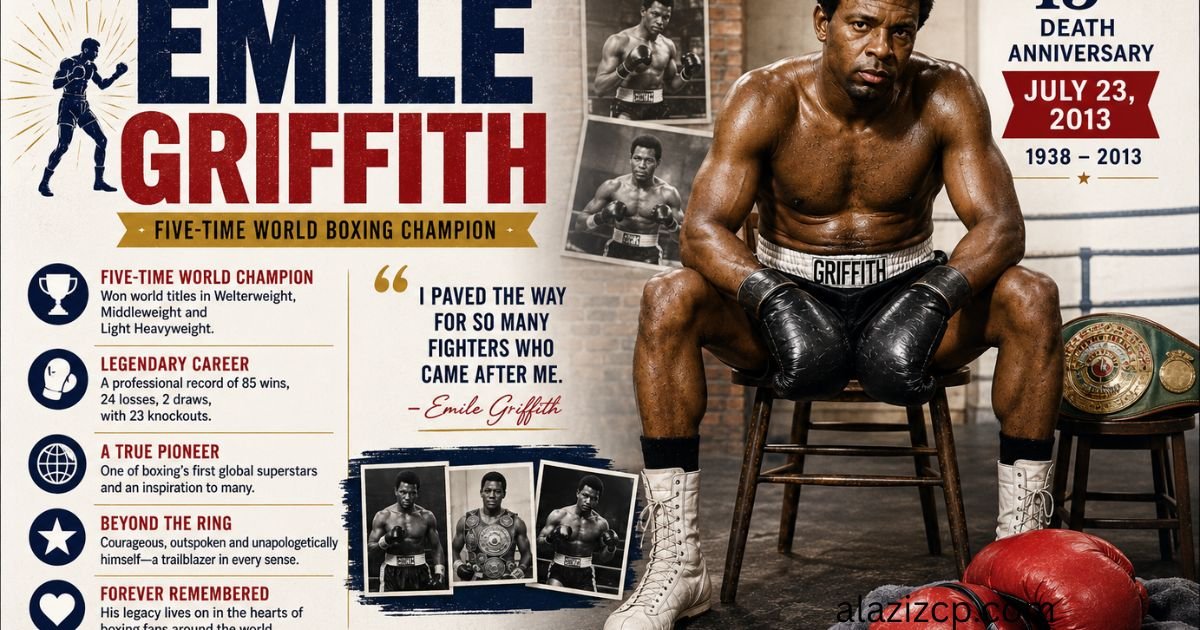
I think i am sure thirteen years ago today, Emile Griffith death anniversary on July 23, 2013, one of boxing’s most complicated legends died at an extended care facility in Hempstead, New York. Emile Griffith was 75, and by the time he passed, he’d spent decades as one of the sport’s most respected figures, even though the single most famous night of his career was also its most tragic.
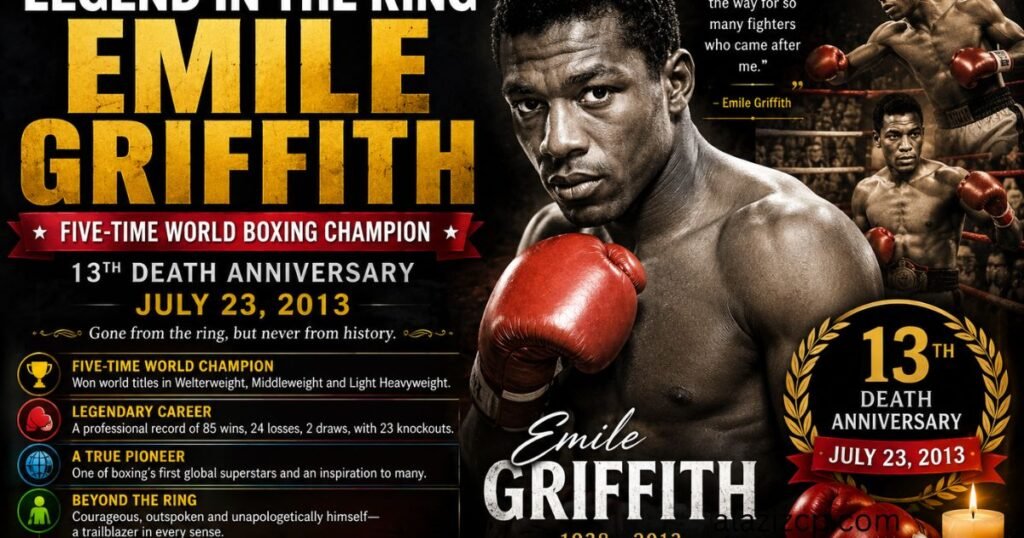
Griffith was born in February 1938 on the island of St. Thomas in the U.S. Virgin Islands, making him the first world champion to ever come out of that territory. He moved to New York as a teenager and was working in a hat factory in Manhattan’s Garment District when his boss noticed something in the way he was built and sent him to a boxing gym. That chance discovery turned into one of the more remarkable careers in the sport’s history. Griffith went on to win world titles in three different weight classes, welterweight and middleweight among them, compiling an 85 win record across 112 professional fights and headlining Madison Square Garden 23 separate times.
None of that, though, is what most people remember him for. On March 24, 1962, Griffith fought Benny Paret for the welterweight title at Madison Square Garden in front of a national television audience. At the weigh-in the day before, Paret had directed an anti-gay slur at him, something Griffith found especially painful given the private struggles he’d had with his own sexuality. In the twelfth round of their fight, Griffith knocked Paret out with a devastating combination against the ropes. Paret fell into a coma and died ten days later. The fight was so brutal that some television networks stopped broadcasting live boxing afterward, and it changed the sport in ways still felt decades later.
Griffith never talked about that fight as revenge, and he insisted for the rest of his life that what happened wasn’t connected to what Paret had said. Still, people close to him have said he was never quite as aggressive in the ring again after that night. He kept fighting for another decade anyway, adding more championships along the way, and became a beloved figure at Hall of Fame events later in life, where fans would give him standing ovations just for slowly rising from his seat and waving. Keep in touch with us.
His later years brought their own hardships. In 1992, Griffith was the victim of a brutal homophobic attack outside a New York gay bar that left him hospitalized with serious injuries. He also developed pugilistic dementia, a condition linked to the repeated blows boxers absorb over long careers, which eventually required him to have full time care. He died from kidney failure connected to that condition.
Ed Brophy, director of the International Boxing Hall of Fame, called him a gifted athlete and, just as importantly, “as great a gentleman as he was a fighter” outside the ring. Thirteen years after his death, Griffith’s story still gets told as one of the sport’s most human ones, a champion whose greatest night in the ring became the thing he spent the rest of his life trying to make peace with.
Thanks for reading . keep touch with us.

Senior Content Editor at AlAzizCP specializing in deep-dive biographies, career financial profiles, and daily updates on American celebrities, politicians, and sports legends. With years of experience researching public records, contract earnings, and media archives, the AlAzizCP editorial team delivers accurate and engaging insights into today’s most influential public figures.