

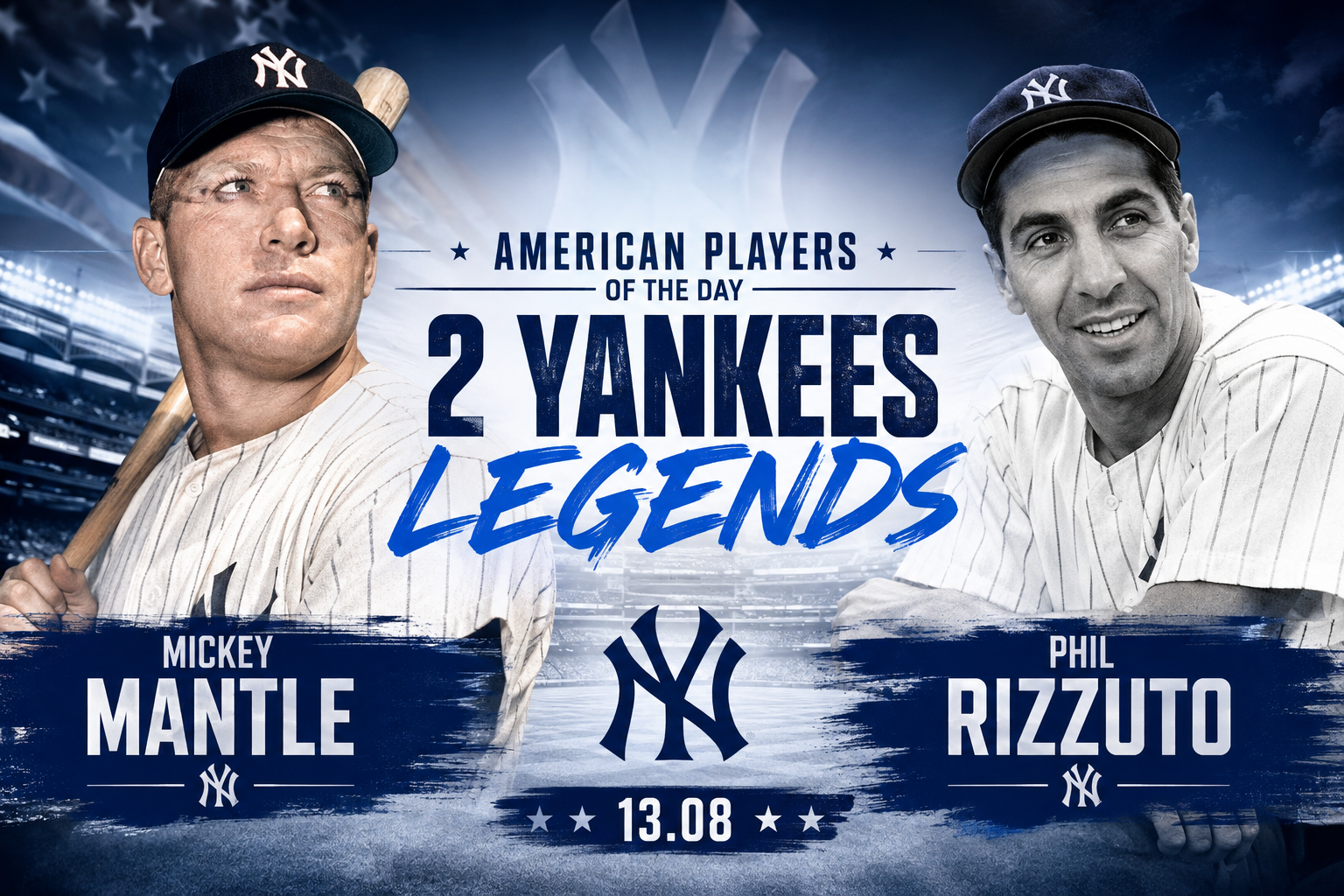
American Players Of The Day: Mickey Mantle and Phil Rizzuto: 2 Yankees Legends. 13.08
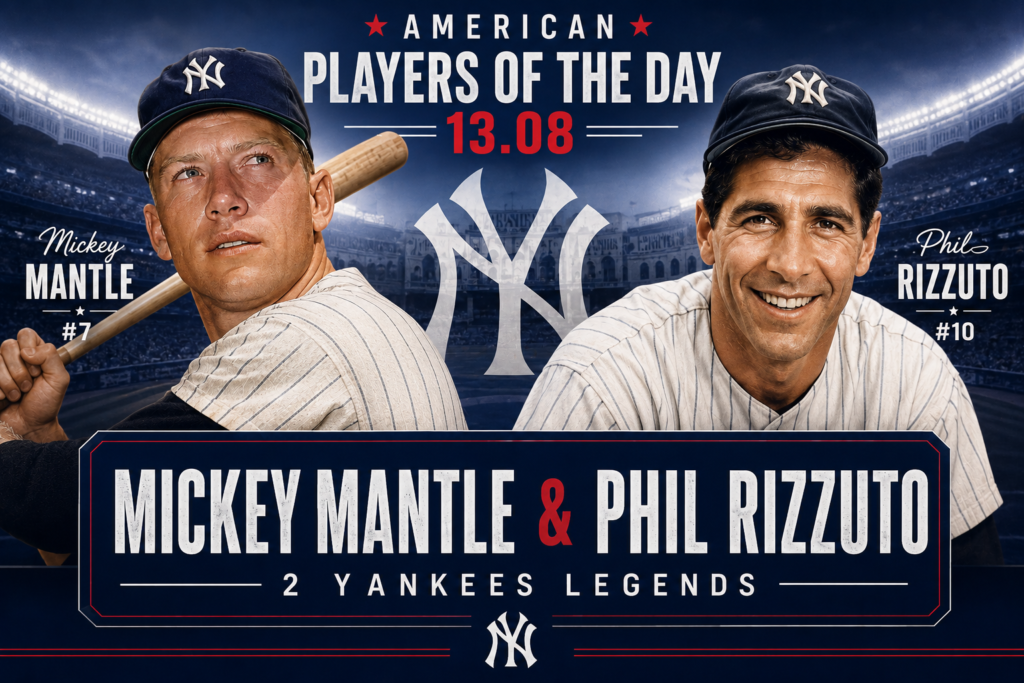
I know few franchises in American sports carry the weight of history quite like the New York Yankees, and 2 of their most beloved figures share an eerie connection in how their stories ended. Mickey Mantle, the powerful switch hitting slugger who defined an era of Yankees baseball, died on August 13, 1995. Twelve years later, on that same date in 2007, Phil Rizzuto, the scrappy shortstop turned beloved broadcaster who had actually played alongside Mantle early in his career, passed away as well.
Both men wore the same pinstripes, both are enshrined in the Baseball Hall of Fame, and both left the game with legacies that still shape how fans talk about the Yankees today.
Mickey Mantle: The Mick Who Defined an Era
A Small Town Kid With Enormous Talent
Mickey Charles Mantle was born on October 20, 1931, in Spavinaw, Oklahoma, and grew up in nearby Commerce, where his father, a lead and zinc miner, taught him to switch hit from an early age. That early training became one of the defining features of his game, allowing him to hit for power from both sides of the plate in a way few players before him ever had. He signed with the New York Yankees as a teenager and was in the major leagues by the age of nineteen.
A Legendary Run With the Yankees
Mantle played his entire eighteen year career with the Yankees, from 1951 to 1968, forming part of a lineup that also featured Yogi Berra and, briefly, Phil Rizzuto. He won the Triple Crown in 1956, earned three American League MVP awards, and helped the Yankees capture seven World Series titles. His combination of raw power and blazing speed made him one of the most feared hitters of his generation, even as recurring injuries throughout his career limited what many believed could have been an even greater set of numbers.
A Public Battle in His Final Years
After retiring, Mantle struggled openly with alcoholism, a battle he later spoke about candidly in his final years as a way of warning others. In 1995, he underwent a liver transplant after years of damage, but doctors soon discovered that cancer had already spread beyond what surgery could address. He died on August 13, 1995, at Baylor University Medical Center in Dallas, Texas, at the age of 63. His willingness to speak honestly about his health struggles in his last months left a lasting impact that went beyond his playing statistics.
Phil Rizzuto: The Scooter Who Never Really Left the Yankees
A Small Player With a Big Nickname
Philip Francis Rizzuto was born on September 25, 1917, in Brooklyn, New York. Standing only five feet six inches tall, he was often told as a young player that he was too small for professional baseball. He proved the doubters wrong, signing with the Yankees and debuting in the major leagues in 1941, where his quickness on the field quickly earned him the nickname Scooter.
A Decorated Playing Career
Rizzuto spent his entire thirteen year playing career with the Yankees, interrupted by several years of naval service during World War II. He won the American League MVP award in 1950, made five All Star teams, and was part of seven World Series championship teams during the Yankees dynasty years of the 1940s and early 1950s. Known more for his defense and bunting skill than raw power, Rizzuto became a fan favorite for his hustle and consistency at shortstop.
Fifty Years Behind the Microphone
After his playing career ended in 1956, Rizzuto stayed with the Yankees organization in a completely different role, joining the broadcast booth in 1957 and remaining there for the next four decades. His signature catchphrase, Holy Cow, became instantly recognizable to generations of Yankees fans, and his rambling, unpolished broadcasting style made him one of the most beloved voices in the sport. He was elected to the Baseball Hall of Fame in 1994. Rizzuto passed away on August 13, 2007, in West Orange, New Jersey, at the age of 89, as the oldest living Hall of Fame member at the time of his death.
Two Careers, One Franchise, One Shared Date
What makes the connection between these two men so striking is not just the shared date but the fact that their careers actually overlapped. Rizzuto was already an established Yankee when Mantle arrived as a young rookie in 1951, and the two shared a clubhouse before Rizzuto’s playing days ended a few years later. Mantle went on to become the face of Yankees power for nearly two decades, while Rizzuto transitioned into a second career that kept his voice connected to the team for even longer than his playing days had.
Both men, in very different ways, became symbols of loyalty to a single franchise. Mantle never played for another team, and Rizzuto never worked for one, spending more than fifty years total wearing the Yankees name in some form. Their shared date of passing feels less like coincidence and more like a quiet final tribute to two careers that were always intertwined.
Frequently Asked Questions
Who was Mickey Mantle?
Mickey Mantle was a Hall of Fame outfielder who played his entire eighteen year career with the New York Yankees, winning three MVP awards, a Triple Crown, and seven World Series titles.
How did Mickey Mantle die?
Mantle died on August 13, 1995, from cancer that had spread after complications related to years of alcohol related liver damage, shortly after receiving a liver transplant.
Who was Phil Rizzuto?
Phil Rizzuto was a Hall of Fame shortstop who played thirteen seasons with the New York Yankees before becoming a beloved team broadcaster for forty years, known for his catchphrase Holy Cow.
How did Phil Rizzuto die?
Rizzuto died on August 13, 2007, at the age of 89, in West Orange, New Jersey, after a long period of declining health.
Did Mickey Mantle and Phil Rizzuto ever play together?
Yes. Rizzuto was already an established Yankees player when Mantle joined the team as a rookie in 1951, and the two were teammates for a short period before Rizzuto’s playing career ended in 1956.
Disclaimer
This article is written for informational and historical purposes only, based on publicly available sports records, Hall of Fame biographies, and verified news reports. It is not affiliated with either player’s family, estate, or the New York Yankees organization. Readers seeking complete or official statistics are encouraged to consult recognized baseball archives directly.