

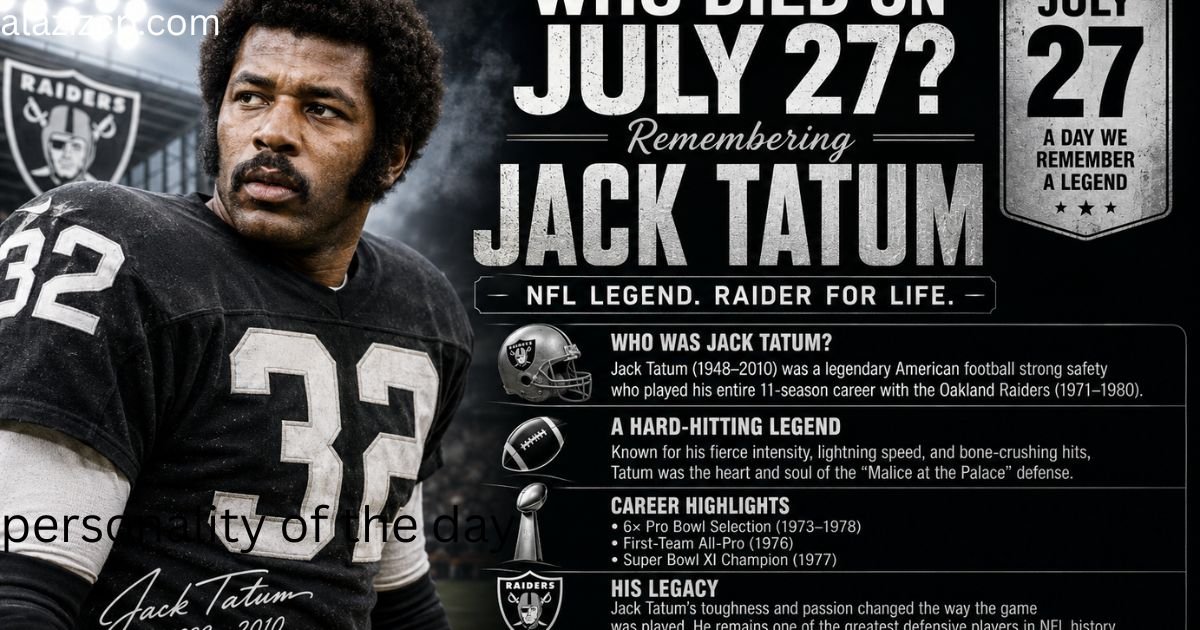
Do You Know About the American Player of the day on July 27?
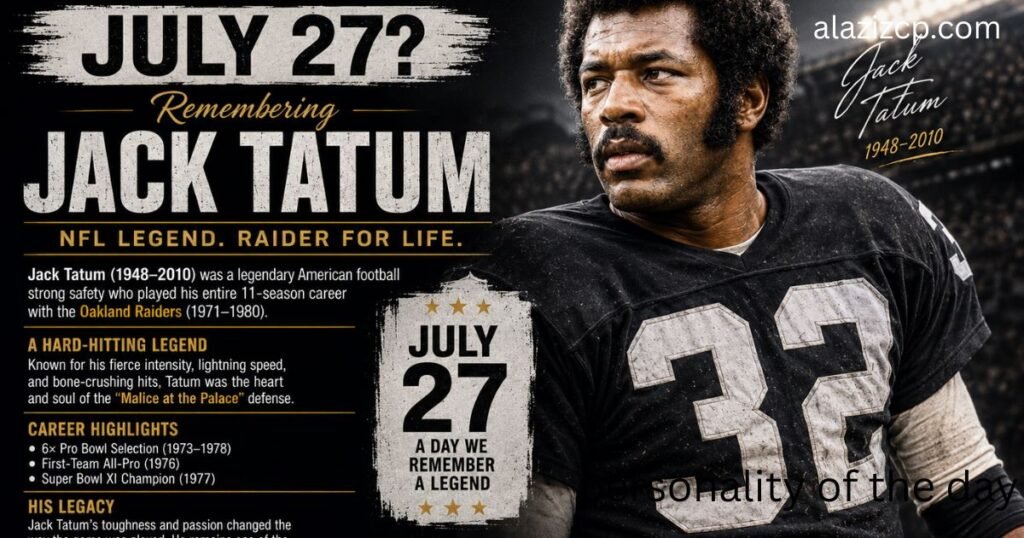
I am sure 16 years ago today, on July 27, 2010, one of the most feared defenders in NFL history died of a heart attack in an Oakland hospital. Jack Tatum was 61, and by the time he passed, diabetes had already cost him his right leg and every toe on his left foot, a slow decline that friends called almost too poetic for a man once known simply as “The Assassin.”
Tatum was drafted by the Oakland Raiders in the first round in 1971, straight out of Ohio State, and quickly became one of the most punishing safeties the league had ever seen. Over ten NFL seasons, split mostly with the Raiders and briefly with the Houston Oilers, he racked up 37 interceptions and earned three Pro Bowl selections, all while building a reputation for hits so devastating that opposing receivers reportedly changed their routes just to avoid crossing his path. In 2009, NFL.com ranked him the sixth most feared tackler the league had ever produced. He was also part of the Raiders’ 1976 Super Bowl championship team, and his career even brushed up against one of football’s most iconic plays, the “Immaculate Reception,” when a ball deflecting off him or a Steelers player in a 1972 playoff game ended up in Franco Harris’s hands for one of the most famous touchdowns in league history.
None of that, though, is what most football fans remember first when they hear his name. On August 12, 1978, in a preseason game against the New England Patriots, Tatum delivered a hit on receiver Darryl Stingley that severed his fourth and fifth vertebrae. Stingley was left paralyzed from the neck down for the rest of his life. It remains one of the most sobering moments in NFL history, a reminder of just how violent the sport could be even outside of games that actually counted.
What made the aftermath especially difficult for many fans to process was that Tatum never publicly apologized. He wrote three separate books touching on the hit, including one bluntly titled “They Call Me Assassin,” and in each of them he maintained that the tackle was simply part of the game he’d always played. Stingley’s family reportedly turned Tatum away when he tried visiting the hospital shortly afterward, and the two men never spoke again before Stingley’s own death in 2007. Friends closer to Tatum, including former Ohio State teammate John Hicks, said privately that the hit haunted him too and that he became something of a recluse in the years that followed, even if he never said so publicly.
When news of his death broke, the Raiders organization released a statement calling him a true Raider champion and warrior, someone who’d become a standard for the safety position in both college and professional football.
Sixteen years later, Tatum’s legacy still sits in that same uneasy space it always did, remembered simultaneously as one of the position’s all-time greats and as the central figure in a moment that permanently changed how the NFL thinks about excessive violence on the field.
Thanks for joining us

Senior Content Editor at AlAzizCP specializing in deep-dive biographies, career financial profiles, and daily updates on American celebrities, politicians, and sports legends. With years of experience researching public records, contract earnings, and media archives, the AlAzizCP editorial team delivers accurate and engaging insights into today’s most influential public figures.