

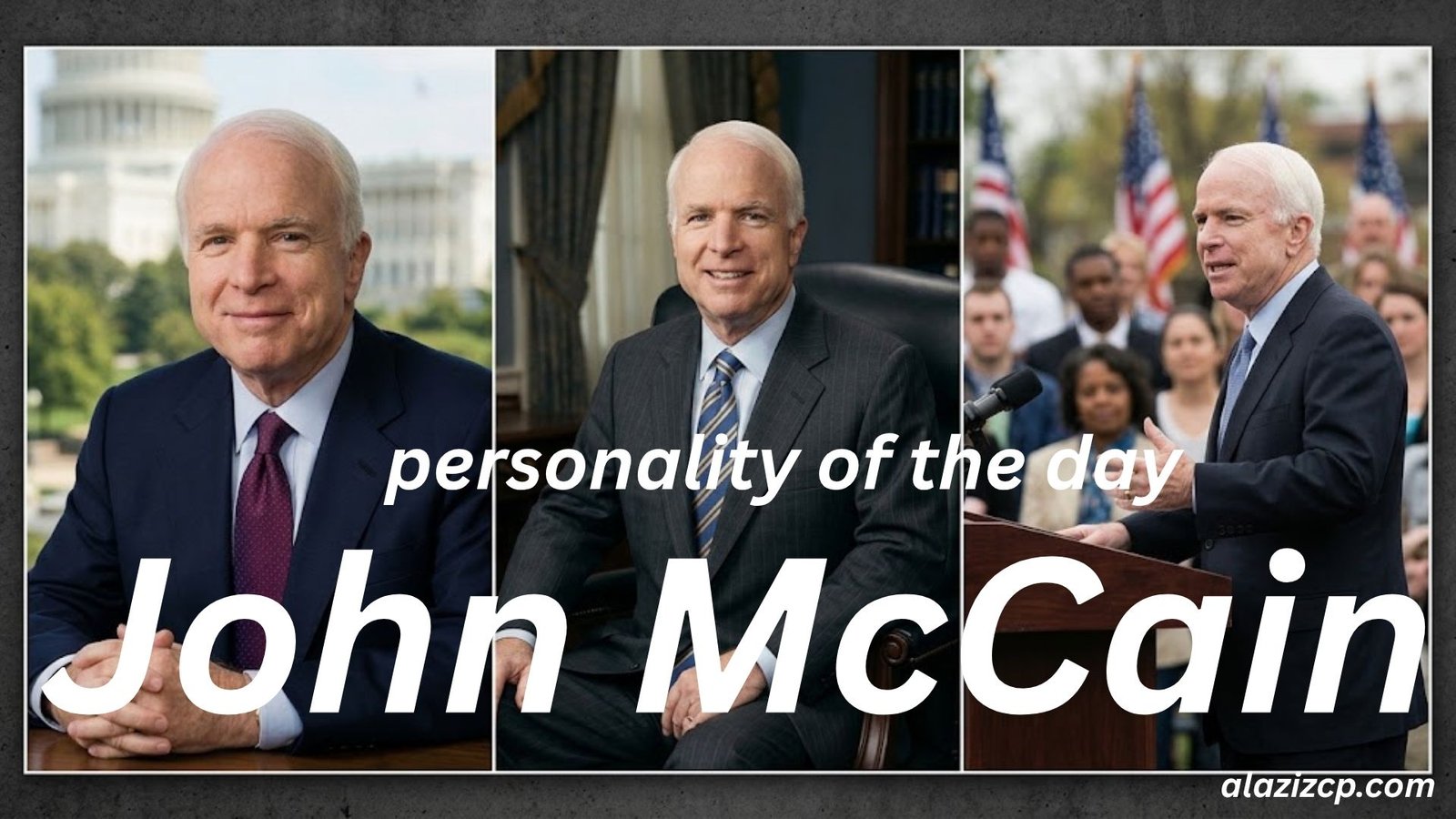
John McCain
Few figures in modern American politics have embodied independence, public service, and legislative independence quite like John Sidney McCain III. Born on August 29, 1936, at the Coco Solo Naval Air Station in the Panama Canal Zone, McCain dedicated more than five decades of his life to military service and public office.
Known across the political landscape as a “maverick,” McCain earned a reputation for challenging party orthodoxy, advocating for military veterans, and championing targeted policy compromises in the U.S. Senate.
Early Life, Naval Aviation, and Captivity, John McCain
Coming from a distinguished military family, both his father and grandfather were four-star admirals in the United States Navy, and McCain followed in their footsteps by graduating from the United States Naval Academy in 1958. He became a naval aviator, flying ground-attack aircraft from aircraft carriers during the Vietnam War.
In October 1967, during a bombing mission over Hanoi, McCain’s plane was shot down. He was severely injured and captured by North Vietnamese forces. Despite enduring over five years of imprisonment and torture as a prisoner of war (POW), McCain refused early release offers that bypassed his fellow service members. He was released in 1973, returning home as a decorated military hero awarded the Silver Star, Bronze Star, and Purple Heart.
Entering the U.S. Senate and Building a Legacy, John McCain
After retiring from the Navy in 1981, McCain transitioned into politics. He was elected to the U.S. House of Representatives from Arizona in 1982, followed by a successful election to the United States Senate in 1986, taking the seat previously held by conservative icon Barry Goldwater.
Over his six terms in the Senate, McCain became one of Congress’s most recognizable and influential lawmakers. While consistently conservative on defense and fiscal matters, he frequently broke rank with his party on key legislative fights:
- Campaign Finance Reform:
- Co-authored the landmark Bipartisan Campaign Reform Act of 2002 (McCain-Feingold Act) to limit unregulated “soft money” in federal elections.
- Immigration Reform:
- Co-sponsored comprehensive bipartisan immigration initiatives aimed at modernizing legal pathways and border security.
- Ethics and Oversight:
- Led high-profile investigations into government spending waste, defense procurement contracts, and congressional lobbying practices.
Legislative Achievements and National Impact
McCain’s leadership was particularly visible on the Senate Armed Services Committee, where he served as chairman in his final years in office. He was an outspoken advocate for strong national security policies and human rights protections worldwide.
| Milestone / Role | Service Period | Key Highlights |
| U.S. Navy Captain | 1958–1981 | Flying veteran, 5+ years POW, highly decorated |
| U.S. Representative | 1983–1987 | Served 2 terms representing Arizona’s 1st District |
| U.S. Senator (Arizona) | 1987–2018 | Elected to 6 consecutive terms in the Senate |
| Presidential Nominee | 2008 | Republican nominee for President of the United States |
| Senate Armed Services Chair | 2015–2018 | Focused on military readiness, oversight, and defense reform |
The 2000 and 2008 Presidential Campaigns, John McCain
McCain’s national prominence reached its peak during his presidential runs. In 2000, his insurgent primary campaign against George W. Bush captured national attention, driven by his famous “Straight Talk Express” campaign bus and town-hall-style Q&A sessions.
In 2008, McCain secured the Republican nomination for president. Throughout the general election campaign against Barack Obama, he emphasized national defense, economic reform, and political independence. Although he lost the general election, his gracious concession speech was widely praised as a standard for political civility and national unity.
The Role of Bipartisanship in Legislative Governance
The concept of political independence, often referred to as being a legislative maverick, plays an important role in how lawmaking functions within a democratic government. When senators and representatives cross party lines, it allows for bipartisan negotiation on high-stakes issues that might otherwise end in gridlock.
During his career, McCain demonstrated that political parties achieve longer-lasting legislative victories when they engage directly with opposition leadership. Bipartisan collaboration on committees allows major bills to earn broader public trust, ensuring that federal laws survive changes in political administrations over time.
Enduring Influence on American Politics
Until his passing on August 25, 2018, McCain remained a central figure in American public life. His career highlighted the power of institutional knowledge, defense expertise, and a willingness to put national interests ahead of party politics. Today, historians and political analysts view his Senate career as a benchmark for public service and legislative independence.
Tomorrow we read Amazing Personality again

Senior Content Editor at AlAzizCP specializing in deep-dive biographies, career financial profiles, and daily updates on American celebrities, politicians, and sports legends. With years of experience researching public records, contract earnings, and media archives, the AlAzizCP editorial team delivers accurate and engaging insights into today’s most influential public figures.