

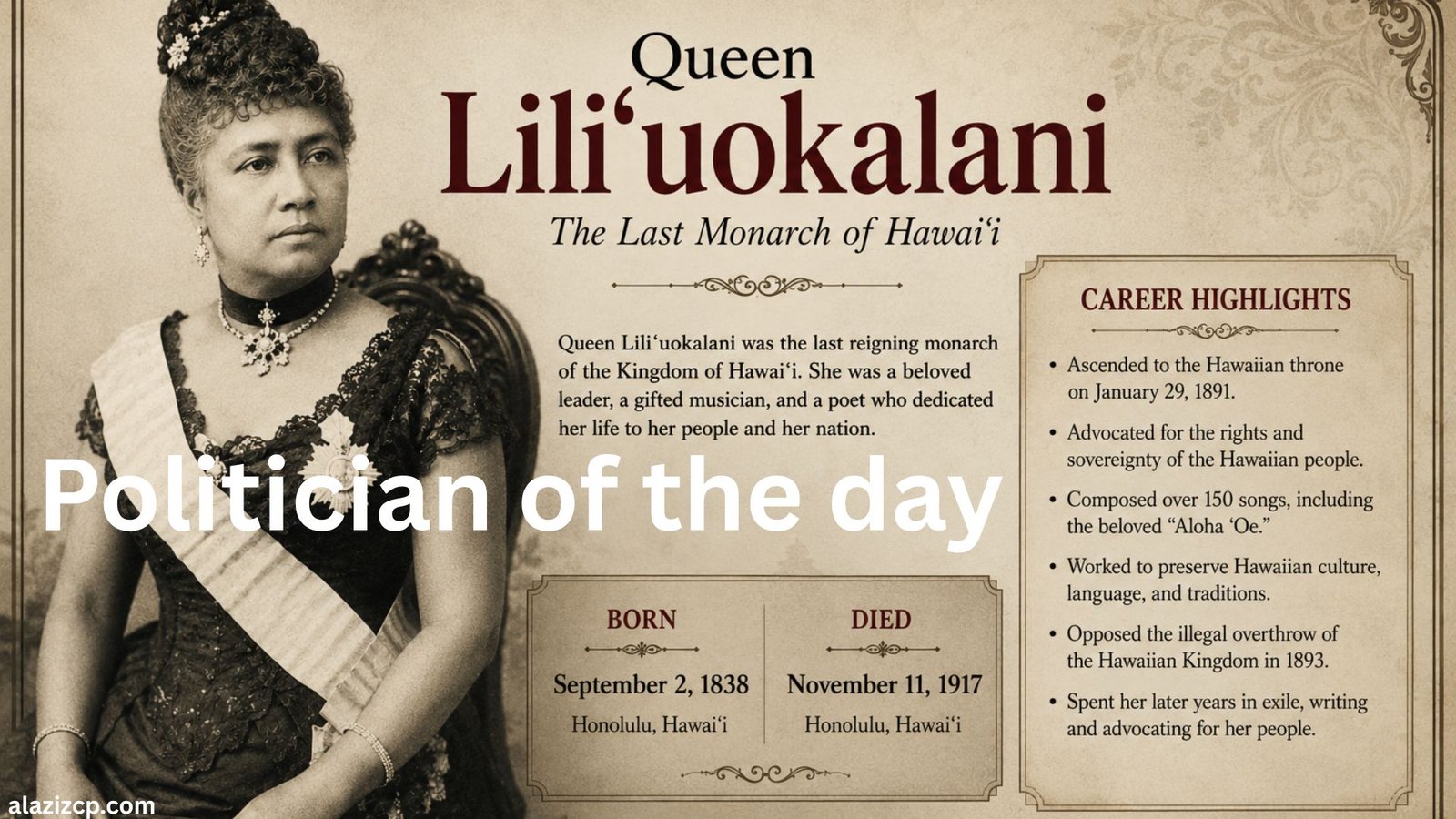
Queen Liliuokalani political legacy
As the first queen regnant and final monarch of the Kingdom of Hawaii, her political leadership during the late 19th century was defined by a fierce commitment to constitutional governance, native civil rights, and peaceful diplomacy. On september 2, 1838, one of the most courageous, dignified, and historically significant political leaders in American and Pacific history was born in Honolulu, Hawaii: Lydia Liliʻuokalani.
Quick Facts: The Queen Liliuokalani September 2 Milestone
| Historical Category | Details & Legacy |
| Date of Birth | September 2, 1838 |
| Place of Birth | Honolulu, Kingdom of Hawaii |
| Reign Period | January 29, 1891 – January 17, 1893 |
| Key Political Stance | Drafted a new constitution restoring native voting rights |
| Cultural Contributions | Composer of “Aloha ʻOe” and Hawaiian historical literature |
| Historic Status | First female ruler and last sovereign monarch of Hawaii |
Early Life and Royal Education
Born into a noble Hawaiian family, Liliʻuokalani was educated at the Royal School in Honolulu, where she mastered English, governance, and classical music. Her intellectual sharp-mindedness and diplomatic poise stood out early, earning her high-level political duties during the reign of her brother, King Kalākaua.
When King Kalākaua traveled internationally in 1881, Liliʻuokalani served as regent, demonstrating remarkable administrative skill during a devastating smallpox epidemic by closing Hawaiian ports to protect native populations.
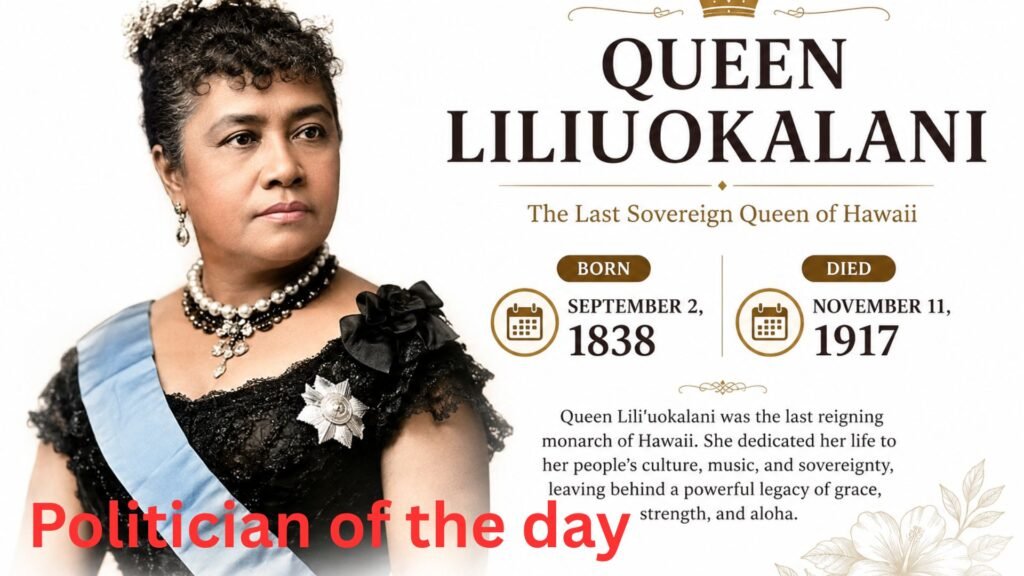
Ascension to the Throne and Constitutional Defense
Liliʻuokalani ascended the throne in January 1891 following her brother’s death. She inherited a complex political crisis caused by the “Bayonet Constitution” of 1887, which had been forced upon the monarchy by a powerful minority of foreign businessmen to strip voting rights from native Hawaiians and Asian residents.
Driven by popular petitions from her people, Queen Liliʻuokalani drafted a new constitution aimed at restoring power to the monarchy and disenfranchising Hawaiian citizens. Her political determination to protect indigenous sovereignty challenged foreign commercial interests, setting off a high-stakes political conflict.
Overthrow, Yielding of Power, and Peaceful Resistance
In January 1893, a group of foreign businessmen, aided by U.S. diplomatic officials and armed Marines, executed a coup against the monarchy. To prevent bloodshed and spare the lives of her citizens, Queen Liliʻuokalani made the strategic political decision to temporarily yield her authority under protest, appealing directly to the United States government to restore Hawaiian independence.
Even after her forced abdication and subsequent house arrest in ʻIolani Palace, she remained a symbol of nonviolent resistance. During her imprisonment, she composed iconic music, including the timeless ballad “Aloha ʻOe,” and wrote her autobiography, Hawaii’s Story by Hawaii’s Queen, detailing the geopolitical maneuverings that shaped her nation’s fate.
Lasting Impact of the Queen Liliuokalani September 2 Story
Liliʻuokalani passed away in 1917, but her political legacy lives on as a cornerstone of Hawaiian cultural identity and indigenous rights. In 1993, the U.S. Congress passed the “Apology Resolution,” acknowledging the illegal overthrow of her government. Celebrating the Queen Liliuokalani September 2 milestone honors a dignified leader whose devotion to peace, law, and her people continues to inspire political justice movements worldwide.
Tomorrow we will discuss another amazing politician

Senior Content Editor at AlAzizCP specializing in deep-dive biographies, career financial profiles, and daily updates on American celebrities, politicians, and sports legends. With years of experience researching public records, contract earnings, and media archives, the AlAzizCP editorial team delivers accurate and engaging insights into today’s most influential public figures.